Insights
Synchronize contractors with a train schedule that actually runs on time
Many trades, one corridor, one fixed date. In our trade train training, yard and contractor teams build a deck of cabins on a physical model in 3 rounds. In the third round they reach up to 50% productivity gain, with the same task and the same team.
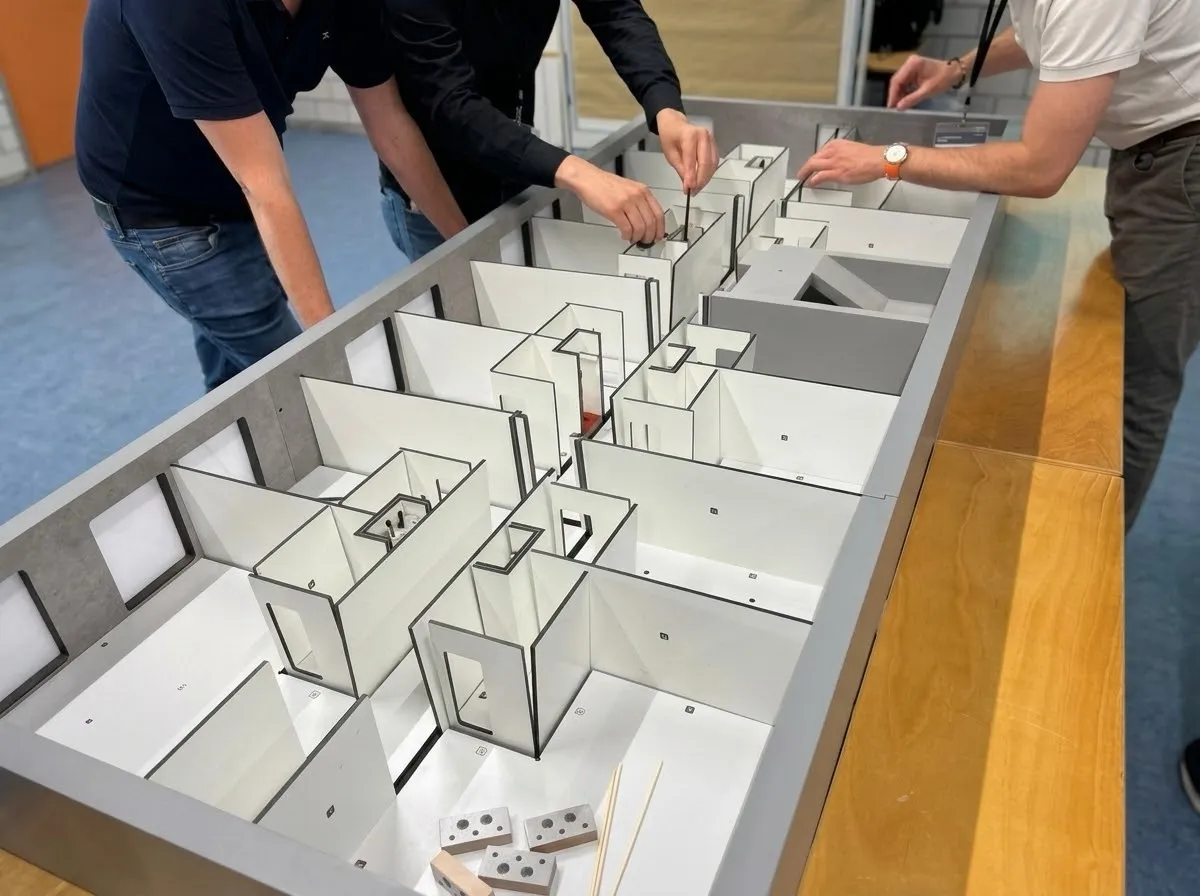
Look closely at the pictures. Experienced project people with lanyards, bent over a model on a table, pliers in hand. Give them 3 rounds and they reach up to 50% productivity gain on the same deck. Same task, same team.
The model is our simulation. It is a hull section with a full deck of cabins, corridors and bathroom units, and every wall is a real part that has to be set, fixed and handed over to the next trade. The schedule is tight and change orders arrive at the worst moment. Just like on board.
The method in short
It is called a trade train and comes from Lean Construction. Split the work into equal takt areas, for example one cabin block. Every contractor gets a wagon, and all wagons move through the areas at the same pace, in a fixed sequence. Each trade has a clear work package per takt. When the takt ends, the area is handed over clean and the next crew starts right away. If a trade runs late, everybody sees it the same day.
3 rounds at the model
Round 1 runs the classic way. Every trade optimizes its own work, material gets pushed in and soon piles up in the corridor. Everybody at the table knows that picture.
Round 2 brings pull and clear handovers. Inventory drops, rework drops.
Round 3 is the trade train, with takt areas, a Last Planner board on the wall and material delivered in takt. That is where the up to 50% productivity gain comes from.
Nobody worked harder. That is usually when the table goes quiet.
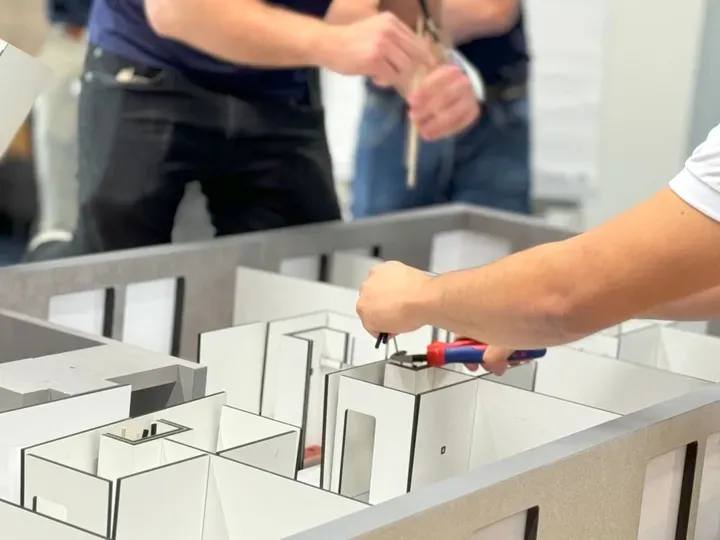
Works wherever trades share the same space
Whether you are the yard coordinating dozens of subcontractors or the turnkey contractor running your own crews on a deck, the problem is the same: many trades, one corridor, one fixed date. The trade train gives everyone the same clock. It works in newbuild outfitting, in a drydock where cabins and public spaces get refitted against the clock, and in offshore accommodation modules. On land it is just as much at home on hotel, hospital and office projects.
The model comes to your site. The people who will share the corridor later sit at the same table now, and together they plan the real sequence for the next project.
If you want to run the simulation with your team, write to us.
Results refer to simulation rounds on the model, not to a ship project.