Insights
Turnaround Day: How to Reset a Cruise Ship in 10 Hours
Every 7 to 10 days, a cruise ship must disembark 5,000 guests, deep-clean 2,500 cabins, load 300,000 pounds of provisions, and welcome 5,000 new guests. All in 10 hours. Here is how lean methods turn organised chaos into a precision operation.
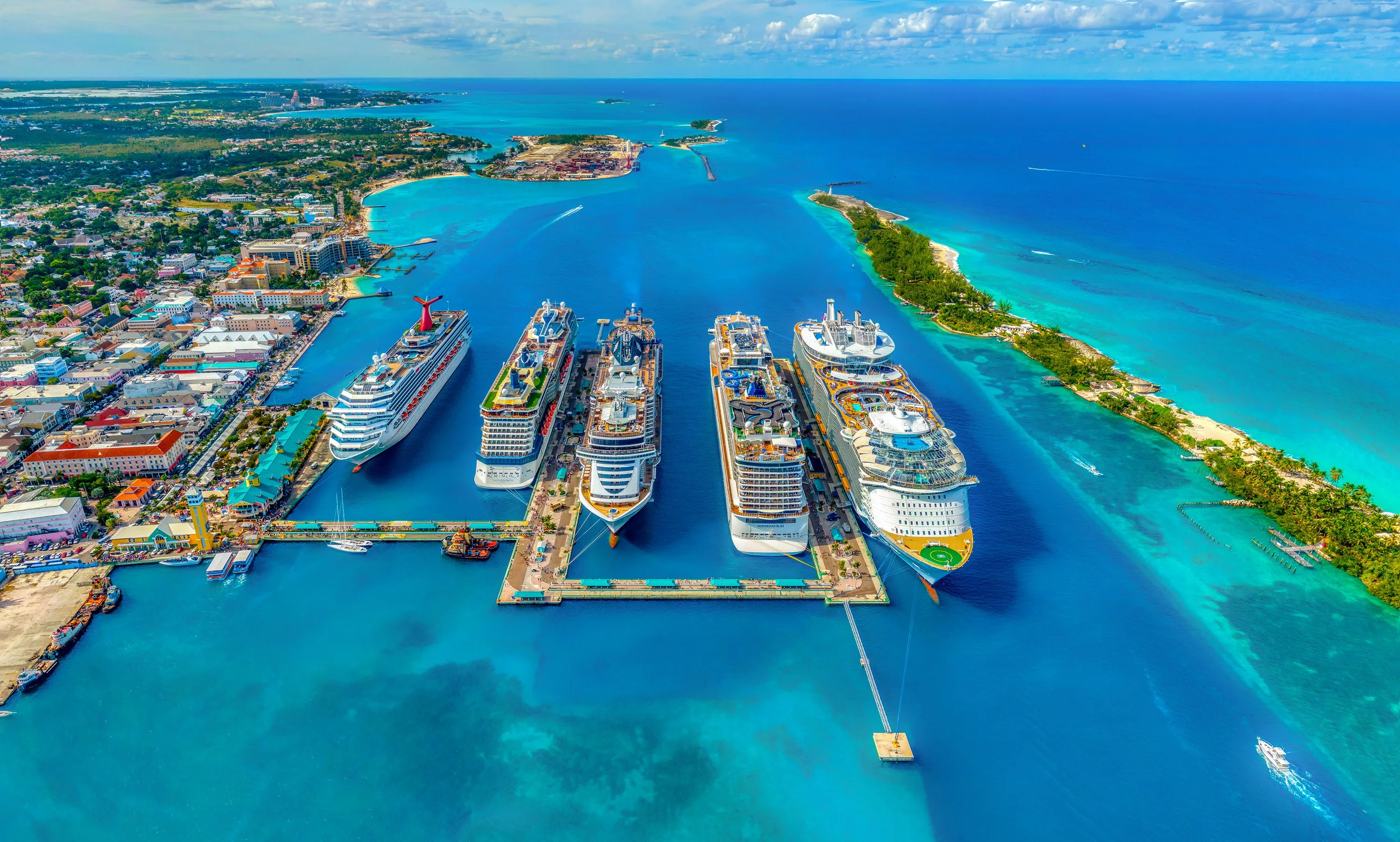
Every seven to ten days, a ship carrying 5,000 passengers docks at dawn. By late afternoon, every guest has left, the ship has been cleaned top to bottom, restocked with hundreds of tons of provisions, and 5,000 new guests have boarded and are sitting down for their first lunch. All within roughly 10 hours.
The cruise industry calls it turnaround day. We call it one of the most complex synchronisation challenges in any industry.
20 processes, one timeline, zero margin
Turnaround day is 20+ interdependent processes running in parallel under extreme time pressure.
Disembarkation starts before most guests are awake. Over 15,000 pieces of luggage must be offloaded and sorted in strict FIFO sequence. While the last guests finish breakfast, housekeeping teams are already entering vacated cabins. Over 2,500 cabins must be stripped, deep-cleaned, sanitised, and restocked in a matter of hours.
On Deck 03, the crew-only service deck, up to 500 pallets of provisions arrive. On a large ship, that means roughly 300,000 pounds of food and beverages, inspected by chefs on the spot and distributed across cold storage, pantries, and galleys fast enough for the kitchen to start preparing lunch for guests who have not even boarded yet.
Simultaneously: waste goes off, fuel comes on, maintenance tickets get closed, new crew members are oriented, and thousands of arriving guests queue for check-in. All of this must converge into a single moment: the ship is ready, and sail-away happens on time.
Why this is harder than any factory
In manufacturing, repetition builds routine. Turnaround day happens once every 7 to 10 days. The crew does not get daily practice. Coordination failures that would surface immediately in a daily process can persist for weeks.
Every turnaround is different. A different port, different regulations, different weather, a different mix of guest nationalities. The operation must be standardised enough to be reliable, but flexible enough to absorb variation every time.
Where things break down
The most common failures fall into three areas. First, synchronisation failure between disembarkation and embarkation. The gap between "last guest off" and "first guest on" is typically 60 to 90 minutes. Lose 30 minutes, and everything downstream compresses.
Second, cabin release bottlenecks. Housekeeping works sequentially through decks, but guest arrivals are random. Without real-time visibility into cabin status, the front desk cannot manage expectations.
Third, provision loading delays. A late delivery or quality rejection ripples all the way to the galley. The first lunch must be served within hours of boarding. There is no buffer.
Research confirms this: embarkation and disembarkation are consistently the lowest-rated experiences in guest satisfaction surveys. This is not a hospitality problem. It is an operations problem.
Why lean is the perfect approach
Turnaround day is essentially a high-speed changeover. The cruise environment demands a system where process discipline and human warmth work together. Lean delivers this through four pillars.
Flow and Takt bring rhythm. When 20 departments work at their own pace, the result is bottlenecks and firefighting. Takt replaces chaos with rhythm. Cabin cleaning feeds inspection, inspection feeds release, release feeds boarding. When each step operates at the right takt, the system moves like a heartbeat.
Standardisation ensures quality. A cabin cleaned but not properly inspected is worse than one not ready yet. Standardisation means every team member knows what "done" looks like. Visual checklists show cabin status in real time. Clear standards also make onboarding faster for rotating crew members.
Crew empowerment handles the unexpected. No turnaround goes exactly to plan. When routine processes run in takt, the crew has mental capacity to focus on the guest in front of them. A front desk team member can offer a solution on the spot. A cabin steward can fix a problem without waiting for a supervisor.
Continuous improvement makes it better every week. Every turnaround is an opportunity to learn. A brief debrief captures what went well and what did not. Over time, small improvements compound.
The result
When these elements come together, cabins are ready when guests arrive, lunch is served on time, and the crew has the energy to welcome every guest with a genuine smile. On projects where we have applied this approach, we have seen turnaround times reduced by 15 to 25 percent, cabin release delays cut in half, and measurable improvements in guest satisfaction scores.
Turnaround day will never be easy. But with the right system, it becomes what it should be: a precision operation that sets the tone for a great cruise.