Insights
NATO's Frigate Crisis: A Playbook for Delivering on Time
Three NATO allies, three flagship frigate programmes, the same pattern of delays and cost overruns. The root causes are consistent - and they are solvable with operational discipline.
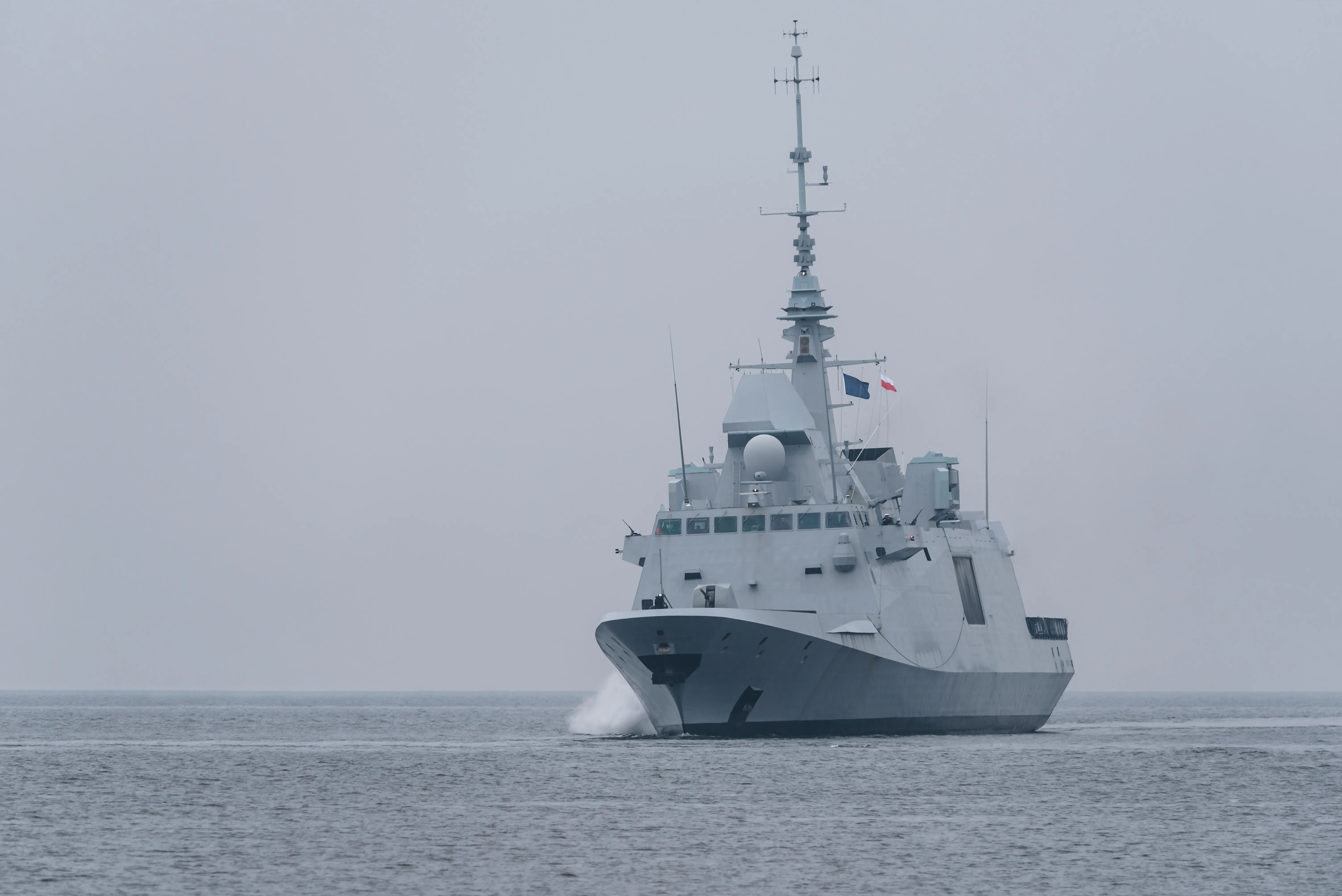
The numbers speak for themselves. In November 2025, the US Navy cancelled most of its Constellation-class frigate programme after years of delays and billions in spending. Germany's F126 programme faces potential delays of up to 48 months, with lawmakers openly debating cancellation. France's FDI, the most disciplined of the three, still delivered its lead ship a year late.
Three NATO allies. Three flagship programmes. The same pattern. And these are not isolated cases. Across the Western world, naval shipbuilding programmes consistently miss their timelines and budgets. The question is no longer whether delays will occur, but why they keep happening, and what can be done about it.
A pattern, not an accident
When you look across these programmes, the specific circumstances differ but the root causes are remarkably consistent.
The first is engineering instability at construction start. In programme after programme, shipyards begin cutting steel before the design is truly mature. The pressure to show progress, meet political timelines, and keep yards utilised drives construction decisions that the engineering status does not support. The result is predictable: rework, out-of-sequence work, and cascading delays that compound over months and years. In one well-documented case, actual construction progress was 3.6% at a point when the plan called for 35.5%.
The second is multi-stakeholder coordination failure. Naval shipbuilding involves at least three parties with fundamentally different priorities: the navy wants capability, the procurement agency manages contracts and compliance, and the shipyard needs to manage cost and production. When these three are not aligned, every design change triggers a chain reaction of negotiations, approvals, and rework. Add international partnerships, multiple shipyard locations, or incompatible IT systems between prime contractors and subcontractors, and the coordination challenge becomes exponential.
The third is combat system integration risk. A modern frigate is a floating data centre with weapons. Integrating radar, missiles, electronic warfare, propulsion controls, and command systems into one cohesive platform is arguably harder than building the hull itself. Some programmes have introduced propulsion configurations or control systems with over 90% new software code. These are risks that do not surface in design reviews. They emerge during integration and testing, usually late in the programme, when the cost of discovery is highest.
The fourth is shipyard execution. Even with a stable design and clear requirements, the shipyard must deliver. Realistic schedules, a trained workforce, reliable supply chains, and rigorous production planning are prerequisites, not nice-to-haves. When shipyards bid aggressively to win contracts and then lack the capacity or processes to execute, the delays are baked in from day one.
What operational excellence can do
None of these problems are new. And none are unsolvable. They are the same categories of problems that lean methods were developed to address in complex manufacturing environments.
Design-to-build readiness can be enforced through quality gates that measure actual engineering maturity, not document counts. Multi-stakeholder coordination improves dramatically when visual management, standardised handoff processes, and regular cadence meetings create transparency across organisations. Production planning benefits from takt-based scheduling, where work packages are synchronised to a predictable rhythm rather than managed through constantly shifting Gantt charts. And integration risk drops when testing is front-loaded through land-based engineering sites and structured prototyping.
The deeper lesson is not about tools. It is about mindset. Programmes fail when speed is promised but not structurally enabled. Lean operations does not mean going faster. It means creating the conditions under which speed becomes possible: stable processes, clear handoffs, early problem detection, and a culture where bad news travels fast.
The navies and shipyards that figure this out will build their ships on time. The others will keep writing billion-dollar cheques for capability that arrives a decade late.